
Reflections from AMLE26: Making Room for Student Success: How Middle School Schedules Can Support the Whole Child

Julie Behme is an Interventionist with the Carlinville Community Unified School District #1
A middle school schedule is more than a plan for moving students from one class to another. It shapes the opportunities students have to learn, build relationships, receive academic support, and develop the skills they need to become independent learners.
At the AMLE26 session Redesigning Middle School Schedules to Support the Whole Child, led by presenter Nicholas Steffner, I was reminded that traditional master schedules can unintentionally create barriers to student success. When the school day is tightly packed, it can be difficult to make room for academic intervention, enrichment, executive functioning instruction, and meaningful connections with supportive adults.
One of my biggest takeaways was the importance of designing schedules with intention. Rather than waiting until students fall behind to provide additional support, schools can build opportunities for intervention and enrichment directly into the school day.

Making Time for More Than Academics
Dedicated time for advisory, targeted academic intervention, enrichment, and executive functioning instruction can make a meaningful difference in students' school experiences.
Middle school students are navigating increasing academic expectations while developing skills such as organization, time management, planning, task initiation, and self-advocacy. We often expect students to arrive with these skills, but they need opportunities to learn and practice them.
Advisory can also provide an important structure for building relationships. Every student benefits from having a trusted adult who knows them, recognizes their strengths and needs, and can advocate for their success.
A thoughtfully designed schedule should make room for all of these experiences, not just for students who are struggling academically, but for every student.

Why Dedicated Reading Intervention Time Matters
Literacy is foundational to success across the middle school curriculum. When students struggle with reading, the effects can extend well beyond English language arts, making it harder to engage with content and demonstrate what they know in other subjects.
That's why access to effective reading intervention matters.
When intervention is built into the schedule, schools can make literacy support a planned part of students' learning experiences rather than something added only after they begin to struggle.

What Reading Intervention Looks Like at Carlinville Community School District #1
For me, these ideas connect directly to how we approach reading intervention at
Carlinville Community School District #1. At CUSD #1, we use data from state assessment, our universal screener and grades to identify students who may benefit from additional academic support. Students receive this support during a designated time block commonly known as W.I.N. (What I Need) Time.
During WIN Time, students are placed in a variety of groups based on their individual learning needs. Some students participate in reading or math enrichment, while others receive targeted reading or math intervention or support through special education resource services.
Each grade level has its own WIN Time scheduled opposite exploratory classes. This scheduling allows students to receive the instruction and support they need without missing out on exploratory classes or other important academic learning.
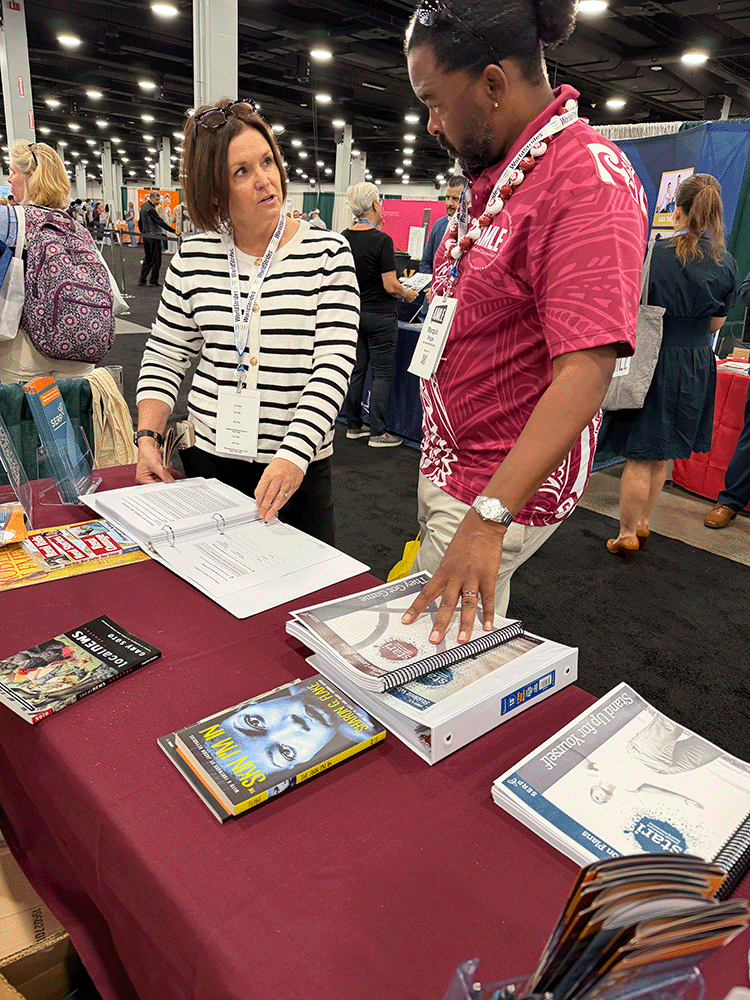
Juilie discusses STARI with an AMLE26 attendee
Students in need of reading intervention receive
STARI (Strategic Adolescent Reading Intervention), a research-based program designed for adolescent students who need additional support with reading comprehension and literacy skills. Providing dedicated time for STARI within the school day allows students to receive targeted instruction without having to rely solely on extra help before or after school.
Ultimately, WIN Time and STARI reflect an important commitment to meeting students where they are and helping every learner grow. We believe students who need additional reading support should not have to miss out on other valuable learning experiences to get the help they need. By building this dedicated time into the school day, we can provide meaningful support while ensuring students have access to a well-rounded educational experience.
Ultimately, a strong middle school schedule should reflect what we want for all students. That means making room for academic growth, enrichment, relationships, and the skills students need to become confident, independent learners.
Explore more from the SERP blog:
Reflections From AMLE26: Academic Rigor Meets Intentional Support by Akilah Hawkins