
Reflections From AMLE26: Academic Rigor Meets Intentional Support

Akilah Hawkins is a School Support Specialist with the SERP Institute
How can educators make complex texts accessible to adolescent readers without compromising rigor?
At the
2026 AMLE conference, Dr. Bryan Drost presented
Adolescent Literacy
5 in 50: Empowering Teen Minds Through Literacy:
Five Key Strategies in Fifty Minutes. Dr. Drost introduced five literacy strategies designed to help educators incorporate complex texts into classroom instruction while maintaining academic rigor. He provided an overview of how to implement these strategies in the classroom and how they might support students’ literacy development over time. These approaches provide instructional frameworks for making complex texts accessible through intentional scaffolding and structured collaboration.
Among the five strategies presented, the Placemat Strategy stood out for its ability to provide students with a shared intellectual purpose while offering different ways to participate. Working in heterogeneous groups, students engage with the same grade-level text but receive differentiated supports based on their reading needs. Each student is accountable for completing their assigned task and recording their thinking before participating in a collaborative discussion. Sharing evidence and questioning one another’s reasoning, they can identify and address misunderstandings. The activity concludes as individual contributions are brought together to develop a collective response.
Dr. Drost’s presentation also highlighted instructional principles reflected in
STARI, where structured collaboration is embedded throughout the curriculum.
Talk Moves, Talk Goals, and teacher modeling encourage students to elaborate on their thinking, connect ideas in the text, and support their interpretations with evidence. Academic discourse occurs throughout STARI, including partner reading and comprehension activities. Familiarity with these routines helps students apply comprehension strategies with greater independence. Through discussion, they question one another, recognize nuances in the reading, and develop a deeper understanding of the text.
Although many of these strategies may be familiar to educators, their effectiveness depends in part on purposeful and consistent implementation. Incorporating even one strategy regularly provides students with repeated opportunities to practice comprehension skills, engage with challenging ideas, and take greater ownership of their learning. Dr. Drost’s session reinforces the importance of pairing appropriate academic challenge with intentional instructional supports that allow adolescent readers to participate meaningfully and develop greater independence as learners.
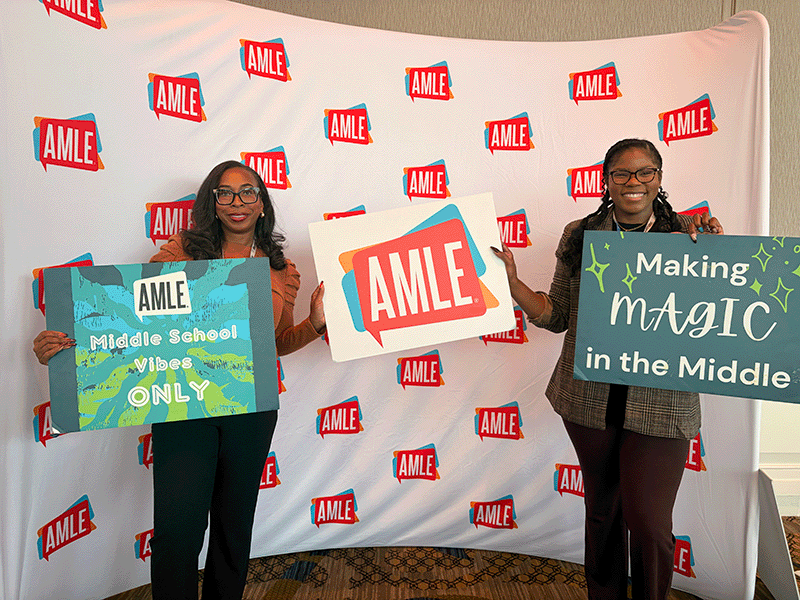
Akilah with her colleague Kala Jones at AMLE26.
Explore more from the SERP blog:
Reflections from AMLE26: Making Room for Student Success: How Middle School Schedules Can Support the Whole Child by Julie Behme