
Why We Added Vocab Catchers to STARI
One of the strengths of
STARI has always been that it continues to evolve alongside the educators who use it. As teachers implement the curriculum in classrooms across the country, they share what is working, what their students need, and where they see opportunities for improvement. Those conversations directly inform updates to the curriculum.
One of the most significant changes to recent STARI units is the addition of
Vocab Catchers, a new approach to vocabulary instruction developed in response to teacher feedback and grounded in what research tells us about how students learn new words.

Listening to Teachers
As we piloted revised STARI units, teachers consistently shared a similar concern. While they appreciated the existing vocabulary previews, they felt students needed more sustained vocabulary instruction.
Many of the adolescents using STARI are reading below grade level. Teachers emphasized that these students don't just need help decoding text, they also need to build the vocabulary necessary to understand increasingly complex academic language and literature.
That feedback prompted us to rethink how vocabulary is taught throughout the curriculum.
Rethinking Vocabulary Instruction
In earlier versions of STARI, teachers introduced three to five vocabulary words before students read each section of text. Students discussed the definitions together, but there wasn't a structured way for them to record the words or intentionally revisit them later in the unit.
Research suggests that this isn't enough.
Students develop lasting vocabulary knowledge through
multiple encounters with words over time, particularly when they meet those words in different contexts and use them in meaningful ways. Simply hearing a definition once rarely leads to long-term learning.
We wanted vocabulary instruction in STARI to better reflect that understanding.
Introducing the Vocab Catcher
The new Vocab Catcher helps students build vocabulary throughout an entire unit instead of during isolated lessons.
Rather than just briefly previewing words, each unit now focuses on a small number of high-utility academic words. These are words that are used frequently in academic contexts, and that are broadly useful across multiple subject areas. Typically, the words have qualities that make them worthy of attention; for example, many of them have multiple meanings, and/or take different forms when prefixes and suffixes are added.
Teachers introduce only a few words each lesson, taking time to discuss their meanings, connect them to students' prior knowledge, and explore how they're used in context.
Students record each word in their Vocab Catcher section of the workbook, creating a growing record of important vocabulary as they read.
The most important change, however, happens after that first introduction.
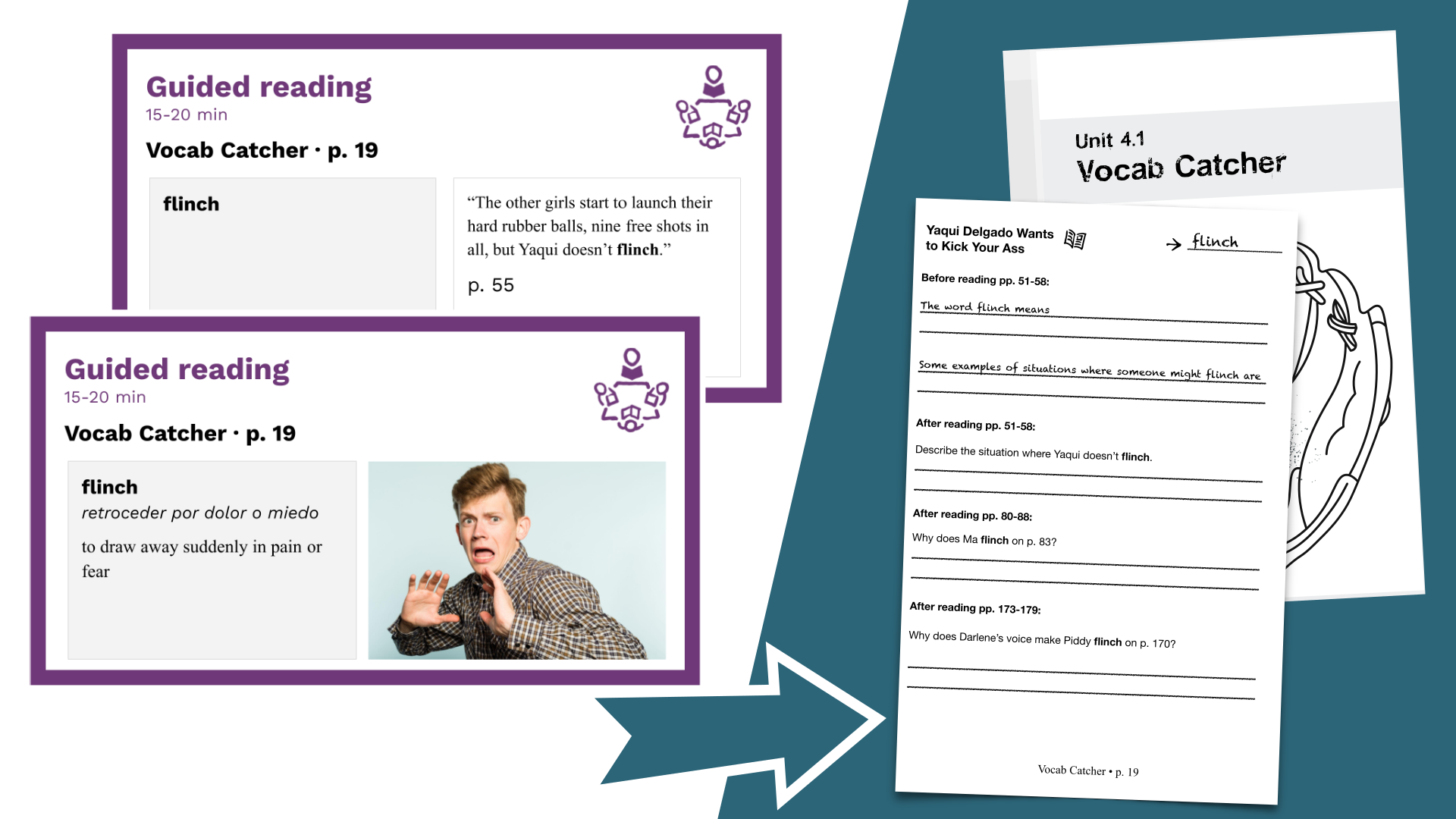
Sample from Series 4, Unit 1. Teachers use slides (left) to introduce word prior to students entering the word into their Vocab Catchers.
Learning Through Repeated Encounters
When students encounter a vocabulary word again later in the novel or informational text, they return to their Vocab Catcher and revisit its meaning.
A word like
flinch, for example, might first be introduced early in a unit. Two weeks later, when students read that a character "didn't flinch," the teacher can bring them back to that earlier learning.
Instead of simply recalling a definition, students discuss questions such as:
- Why didn't the character flinch?
- Why is that significant at this moment?
- What does that tell us about the character?
Each encounter deepens students' understanding of both the word and the text itself.
Over the course of a unit, vocabulary becomes something students build rather than memorize.
Designed for Lasting Learning
The addition of Vocab Catchers reflects a broader goal of STARI: helping struggling adolescent readers develop the knowledge and confidence they need to engage with increasingly complex texts.
By combining teacher feedback with research on vocabulary acquisition, we've created an approach that gives students repeated opportunities to notice, discuss, record, and apply new words throughout their reading.
It's a relatively small addition to the curriculum, but one designed to make vocabulary learning more intentional, more memorable, and more connected to comprehension.
You'll find the Vocab Catcher at the end of each STARI student workbook. Download the latest materials from the SERP Download Center.