
Small School, Mighty Results: How STARI Transformed Reading at PLT
STARI Spotlight: In Prophetstown, Illinois—population 2,000—something remarkable is happening. At
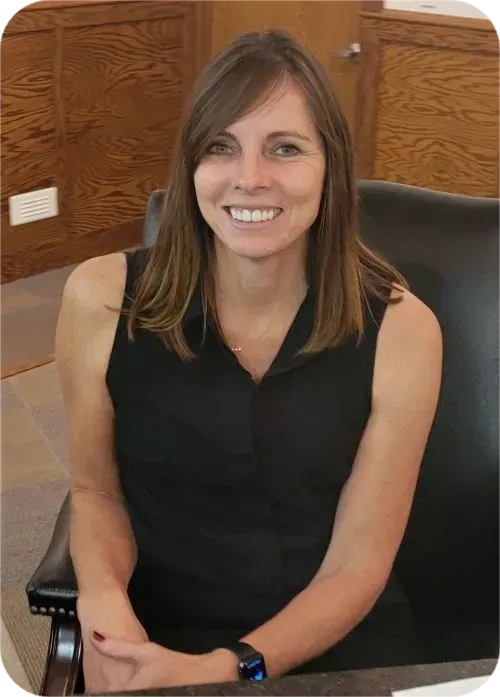
Prophetstown-Lyndon-Tampico 6-12 Campus (PLT), students who once struggled with reading are experiencing breakthrough growth, thanks to STARI and the dedication of Principal Mrs. Janet Barnhart.

By Emily Hayden, Ph.D.
Literacy Specialist
SERP Institute
A Personal Mission Born from the Classroom
Mrs. Barnhart’s journey with reading intervention didn't start in an administrator's office. It began when she taught high school English and faced a challenge that changed her career trajectory.
"I was a literature major, I was a rhetoric minor, there was nothing about teaching students to read in my preparation," she recalls. "And then I had team-taught classes, with 30% of my students identified for special education, and a lot of students who identified as non-readers. I had to jump in and figure out, how am I going to teach them to read?"
That early classroom experience stuck with her. As a Literacy Coach and Dean of Instruction before becoming Principal, Mrs. Barnhart kept searching for solutions that would truly help struggling readers at the middle and high school level.

Why STARI Was the Right Fit
Finding an effective reading program for older students isn't easy. Elementary programs feel too juvenile, while many secondary interventions miss critical foundational skills. When Mrs. Barnhart discovered STARI, she knew she'd found something different.
"It's hard to find a program that fits the needs of middle school and high school," she explains. "STARI still has the components that they're missing, the skills that underlie their reading, but it doesn't feel too elementary. STARI covers everything from phonetic awareness to the metacognitive side. That made the decision easy for us."

The Results Speak for Themselves
After just one year of implementation, the data from PLT tells a compelling story: an impressive 84% of students who participated in STARI moved up at least one level on the Illinois Assessment of Readiness (IAR), which ranges from Below Proficient to Approaching Proficient, Proficient, and Above Proficient. But the numbers only tell part of the story.
What's perhaps even more meaningful is the shift in student mindset. Students who previously saw themselves as unable to contribute to school-wide academic goals are now setting ambitious targets for themselves.
"Our students set grade level goals for the IAR, and then they're very excited to ask me if I've gotten our results," Mrs. Barnhart shares. "They had really high goals for themselves, but seeing the growth from students who, in the past, maybe don't feel like they're going to contribute to being successful on that. When they see their levels going up, they feel like they can be a part of that as well."
The shift from "I can't" to "I can help us succeed" is transformative—not just for test scores, but for students' sense of belonging and capability.

Navigating the Challenges
Success doesn't come without difficult decisions. At PLT, implementing STARI means asking students to give up an elective to participate in the 45-minute daily program. It's a sacrifice, but Mrs. Barnhart is clear about the priority.
"Tell me what is more important to prioritize than reading?" she asks. "If our students can't become proficient readers, then they are going to have a difficult time in life. Once they get to high school, the window of opportunity for improving their reading is closing, and so we really have to prioritize: What is necessary for life for them?"
Another challenge comes from STARI's intentional use of relevant, real-world literature. The program chooses books that reflect the complex world adolescents are navigating—which sometimes means tackling topics that are edgy or controversial. Mrs. Barnhart sees this as an opportunity rather than an obstacle.
"Our students are exposed to so much, and if we're not teaching them how to evaluate what they see on the news, then we're really missing a good opportunity to help them be critical thinkers," she notes. "If we only give them happy, non-controversial literature it doesn't mimic real life. I think that's just a part of our charge as adults: we're not advocating for one side or the other, [but], we're teaching them how to understand the consequences of things that happen."
The key, she emphasizes, is having trusted teachers who can navigate these materials with sensitivity and help students develop critical thinking skills.

Advice for Other Schools
For schools considering STARI, Mrs. Barnhart’s advice is straightforward: look at your data and be willing to try something new.
"Be open, and go in with an open heart," she recommends. Compare STARI to your current interventions and let the evidence guide your decision.
At PLT, a small school in a small town, they've proven that size doesn't limit impact. With the right program, dedicated educators, and students who are ready to grow, transformation is possible. Their story is a powerful reminder that every student deserves the chance to become a confident reader—and that it's never too late to make that happen.
STARI Spotlight highlights real educators making a difference in reading instruction across the country. Know a teacher who should be in the next STARI Spotlight?
Nominate them here. If you have a STARI success story to share, we'd love to hear from you,
share here.