
SERP Stories: Looking Back at Season 1
I started the
SERP Stories Podcast with a research question. What does it look like when research and practice truly work together? Clean. Answerable. The kind of question you can build a season around.
What I didn't expect was how personal the answer would get.
Over seven episodes, I sat with researchers, teachers, curriculum designers, and theorists who have spent their careers inside the hardest problem in education: what do you do for an adolescent reader who has already started to give up? Not a kindergartner. Not a first grader catching letters for the first time. A fourteen-year-old who has been through years of school, years of falling short, and has made the entirely reasonable decision that reading is not for them.
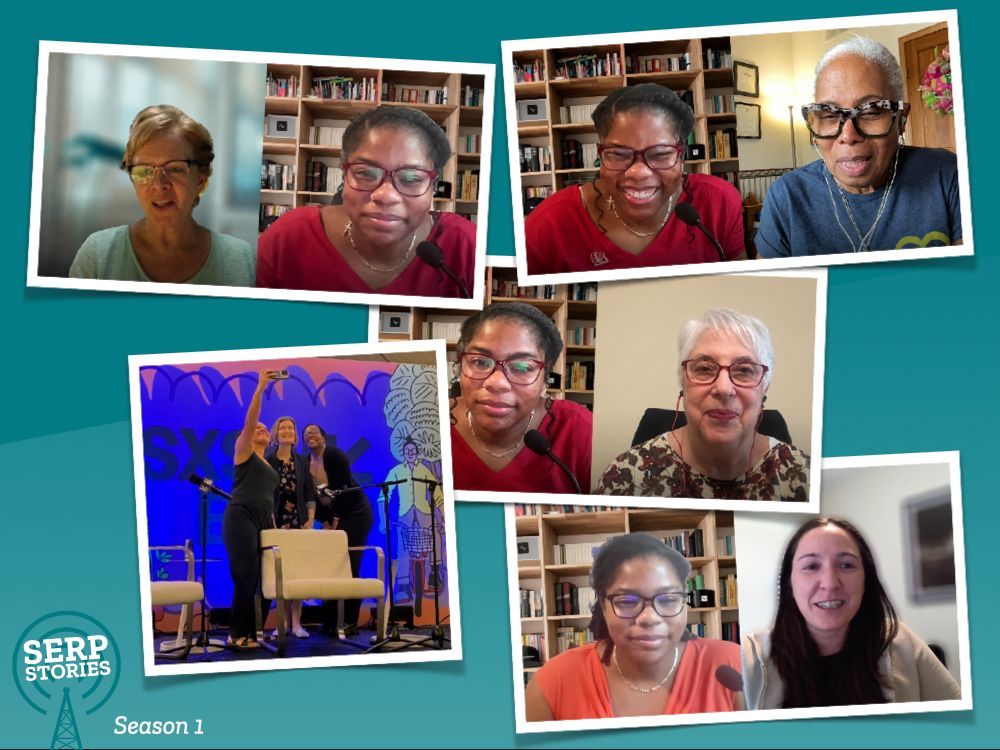
Snapshots from SERP Stories Season 1
Every conversation circled back to the same thing. Not methodology. Not program fidelity. Belief.
Belief that the student in front of you is still reachable. Belief that dignity and rigor are not in tension. Belief that the stories we put in front of students send a message about whether they belong in the room. Gloria Ladson-Billings put it simply: students are sitting in classrooms with people who don't know their experience. That's not a curriculum problem. That's a human one. And it shapes everything, including whether a student ever truly learns to read.
Catherine Snow pushed me to think differently about comprehension. It is not a discrete skill you can drill in isolation. It is every experience a student has ever had. Every connection they can make, every emotion a text stirs, every piece of the world they already carry with them. Which means the texts we choose, and whose lives those texts reflect, are not secondary decisions. They are the instruction.
What stayed with me most, though, wasn't any single idea. It was the consistency. Across frameworks, across roles, across decades of research and practice, everyone I talked to this season arrived at the same place: the students most often written off are the ones who most need someone to refuse to write them off.
Near the end of our final conversation, Gloria talked about the generations of her own family who faced things that looked impossible and worked against them anyway. Just because something is impossible doesn't mean it's not worth doing. Our task is to educate these kids. We don't have another choice.
That's the note I want to leave Season 1 on. Not urgency without direction. Hope with teeth. Purpose with a plan.
Season 2 is coming. There is still more to say.
Listen to the Season 1 finale of SERP Stories wherever you get your podcasts or on our website at serpinstitute.org/podcast