
Education News Update » 09-15-26
OTHER STORIES
Education Department's Civil Rights Data Redacts LGBTQ+ Entries
Schools' Problem Is Motivation, It's Become Impossible to Ignore
Guiding Middle School Students to Commit to Their Own Growth
Commentary: The Equity Blind Spot in School Screen-Time Policies
When Does AI Help Most With Tutoring?
PISA Results
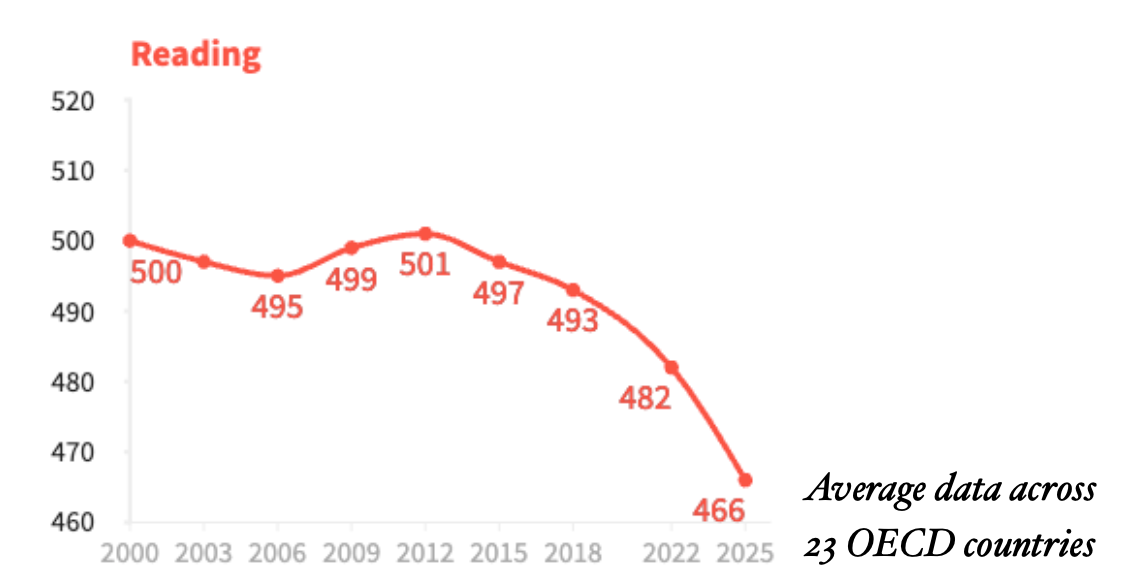
Reading scores for U.S. 15-year-olds nosedived 14 points since 2022, according to recent results from the 2025 Programme for International Student Assessment (PISA). However, compared to the participating countries' average, U.S. students were actually more likely to reach the highest proficiency levels. This is because of
international performance declines in math and reading that resulted in "the lowest average ever recorded" in both subjects, according to the OECD. Researchers are looking to technology and the rise of AI as possible explanations for the significant decreases, and are warning leaders to be wary of them as potential solutions. "People quickly turn to explanations, such as the COVID pandemic," said one expert. "But you know, if you're honest, this decline started much earlier and it continues."
EdWeek,
Chalkbeat,
K12Dive
Screen Time Backlash
Schools are confronting a rising tide of concern over, and outright hostility toward, screen time in the classroom, and education leaders don't expect pushback against education technology to grow. That's why district leaders across the country are thinking seriously about getting to the right amount of classroom tech use and communicating more deliberately with parents about how educators are using technology, even those who haven't yet seen local backlash against devices in their classrooms. Tom Livezey, a superintendent in Michigan, said, "The conversation needs to be deeper than just screen time...The two things that I intend to focus on are: Is the technology safe, and is it helping students learn?"
Edweek
These summaries are abbreviated highlights from the original articles. While we strive to capture key insights, these do not represent the full text or intent of the authors. We encourage readers to explore the full articles linked above for complete context.