
Back to school: What we learned from Mrs. Gross
As a new school year begins, I’ve been thinking about a kindergarten classroom that impressed me so much, I returned the following year to see how Mrs. Gross established her classroom culture. Although she taught kindergarten, I think there’s a version of what she did that applies to every grade level.
Letting Students Lead
The first time I visited Mrs. Gross’ classroom, the six-year-olds got the morning started on their own. One student read the morning message, stopping at the blanks to call on classmates:
Davon: Today is _______ ? Xavier?
Xavier: Tuesday.
Davon: Does Tuesday start with an upper or lowercase T?
Xavier: Uppercase!
Noori:
Let's give him a faaaan-tastic!
When a student answered correctly, the class gave a "faaaan-tastic!" complete with imaginary fans. If someone got an answer wrong, classmates responded, “Good try. You will get it next time. Can you try again please?”
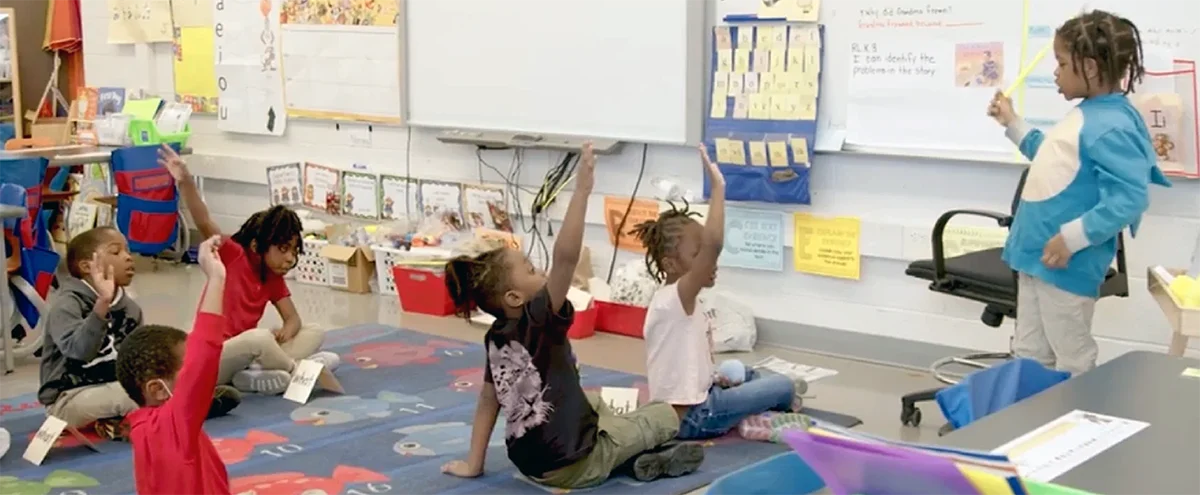
A student in Mrs. Gross' class leading the morning meeting
The routines were so well established that students moved between activities, used materials independently, and understood their role in making the classroom work. Mrs. Gross offered help from time to time, but I never saw her correct a behavior.
Start with Routines
After some convincing, Mrs. Gross agreed to let us record her classroom at the start of the next school year. She welcomed her new students, then immediately began teaching the routines: how to enter the classroom, put away their belongings, gather on the rug, and come to attention.
She knew that spending time on routines would help students know what to expect. But it was the
way she did it
that impressed me.
Let Students Discover Why
Mrs. Gross put on a backpack, skipped into the classroom, pushed past some students, and dropped her backpack on the floor in front of the cubby.
The students immediately objected. Someone could get hurt if she pushed past them, and someone could trip over the backpack. Then she asked students to demonstrate how they would do it.
Their demonstration was flawless.
Mrs. Gross understood something easy to forget: instead of simply telling students what to do, invite them to help establish why the routines matter. Her students were completely on board.
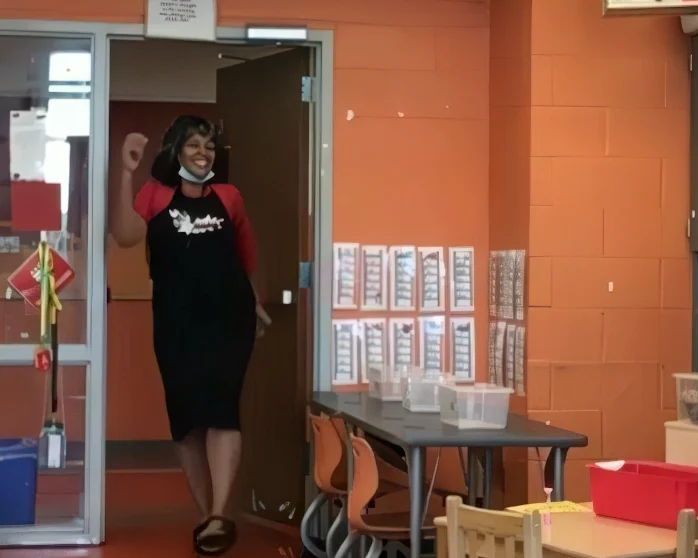
Mrs. Gross demonstrating
how not
to enter the classroom.
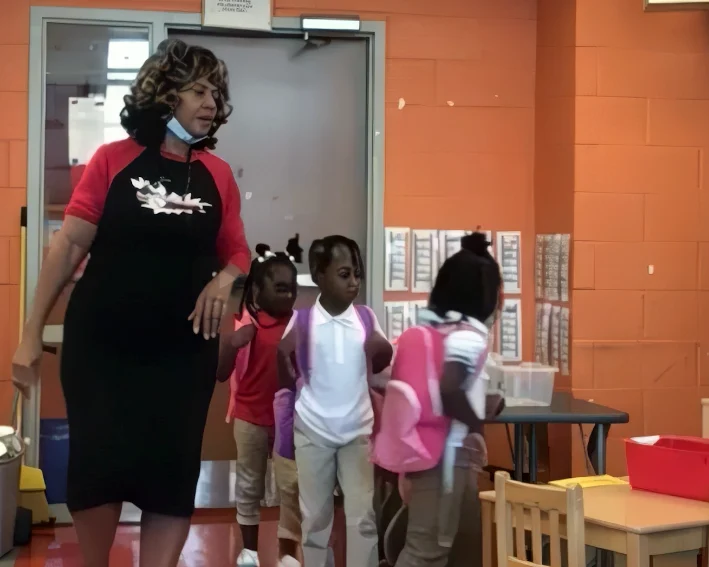
Mrs. Gross' students demonstrating
how to enter the classroom.
Give Students Ownership
She did the same when teaching students how to pay attention. When a student said “hands and eyes,” the adults immediately stopped talking and turned their attention to her.
There was plenty of practice, but the culture was established from the beginning. What seemed effortless midyear was deliberately built through routines that invited students into the process. From Day 1, Mrs. Gross treated her students as capable.
A Lesson for Every Classroom
That's a lesson we've carried into our work at SERP. Mrs. Gross is one of the teachers featured in our
K–2 literacy resources, where educators can see these practices in action.
Whether you're beginning a new school year with kindergarteners, high school students, or anyone in between, I hope you find routines that help your students become the capable, independent members of a classroom community that Mrs. Gross taught us to expect.
Suzanne Donovan
Executive Director
SERP Institute